
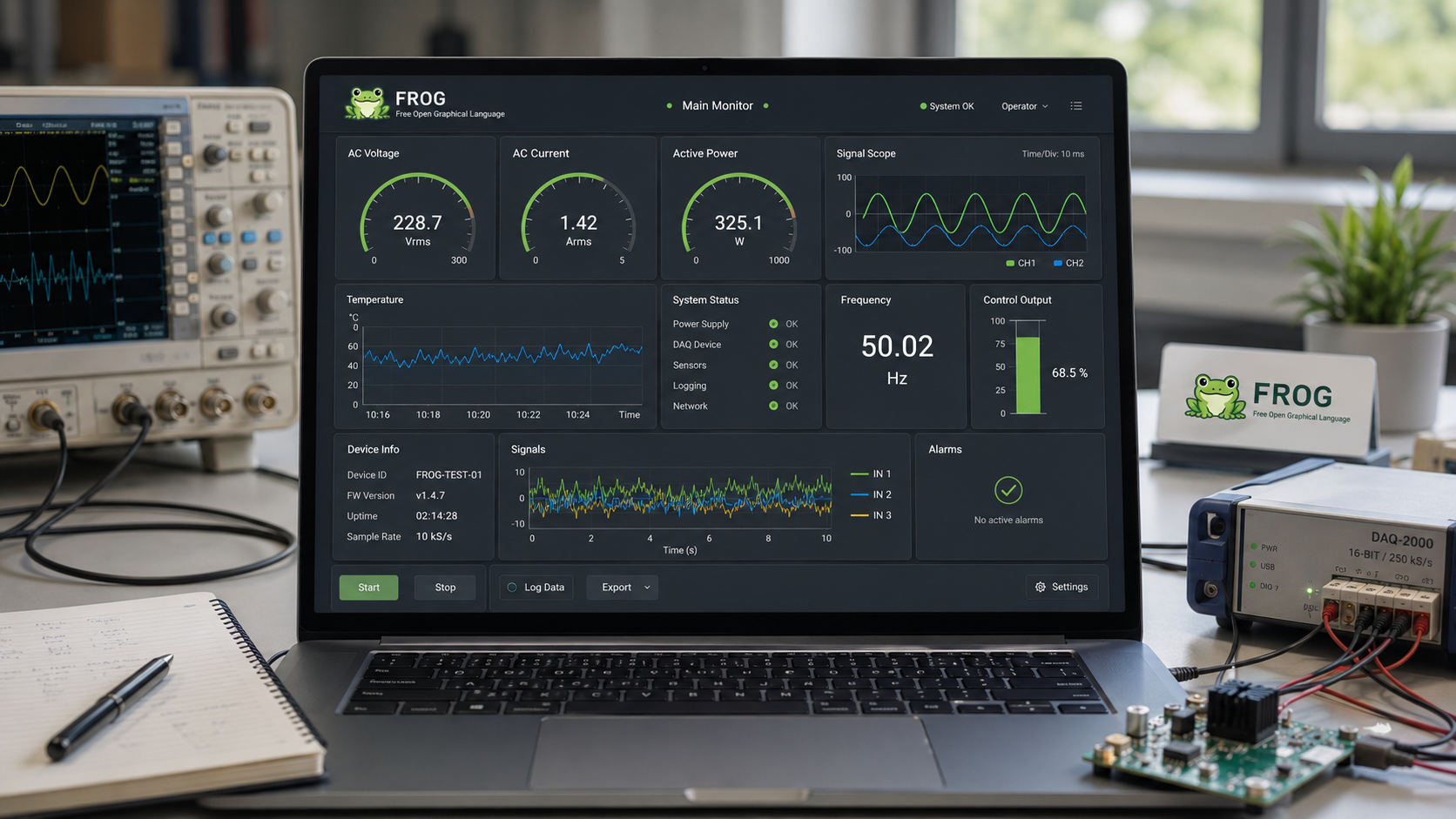
As AI governance becomes operational in 2026, the hardest question is no longer only how fast software can be generated. It is whether humans can still understand, validate, and responsibly operate what AI helped create.
Software generation is becoming abundant.
That statement would have sounded exaggerated only a few years ago. Today, it feels almost conservative.
AI systems can already generate interfaces, APIs, orchestration logic, infrastructure templates, test scaffolding, embedded code, data pipelines, and increasingly complex software architectures in seconds. The software industry is entering a phase where producing code is no longer the primary constraint.
But something else is emerging as a much more serious bottleneck.
Understanding.
Not understanding in the casual sense of “reading code,” but accountable understanding:
- What exactly does a system do?
- What assumptions does it embed?
- What path transforms source into execution?
- Which parts were generated, reviewed, modified, validated, or imported?
- How do humans meaningfully inspect increasingly machine-produced systems?
- Where does responsibility live once software generation becomes partially autonomous?
As organizations move from AI experimentation toward AI governance, auditability, secure development, and operational accountability, these questions stop being theoretical.
They become infrastructural.
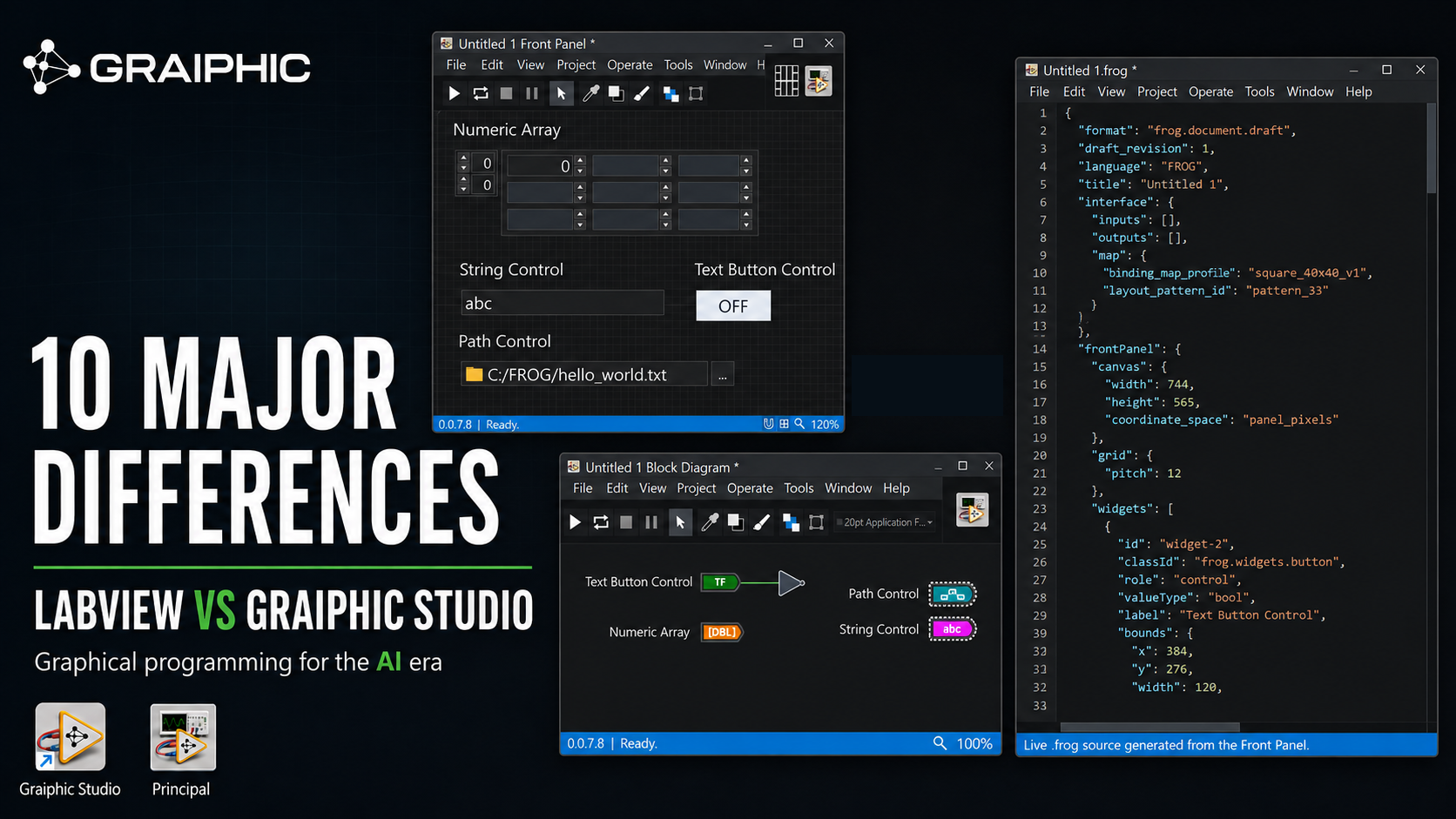
At Graiphic, this broader transition is one of the reasons we started FROG , the Free Open Graphical Language.
More precisely, FROG is an open graphical dataflow programming language initiative designed for a world where executable systems increasingly need to remain understandable across humans, AI tooling, runtimes, compilers, and heterogeneous hardware ecosystems.
Not because graphical programming is fashionable again.
But because inspectable structure may matter more than ever.
Why Software Abundance Changes the Problem
For decades, software engineering was constrained primarily by production capacity.
Writing software was expensive. Expertise was scarce. Complexity accumulated slowly enough that organizations could often compensate through documentation, conventions, reviews, and institutional knowledge.
AI changes that equation.
Generation accelerates dramatically.
A single engineer can now produce volumes of logic that previously required teams. AI-assisted development pipelines compress iteration cycles. Entire software layers can appear almost instantly.
But abundant generation creates a paradox.
The more software we can generate, the harder it becomes to preserve trustworthy understanding of execution behavior.
This becomes especially important in domains such as:
- industrial automation
- robotics
- embedded systems
- distributed edge orchestration
- infrastructure control
- AI-assisted system design
- regulated environments
- security-sensitive deployments
In those contexts, the question is not simply whether software runs.
The question is whether humans can still inspect, validate, review, reason about, and transfer responsibility across increasingly complex execution chains.
That is where FROG enters the discussion.
What FROG Actually Is
FROG stands for Free Open Graphical Language.
It is an open graphical dataflow programming language initiative.
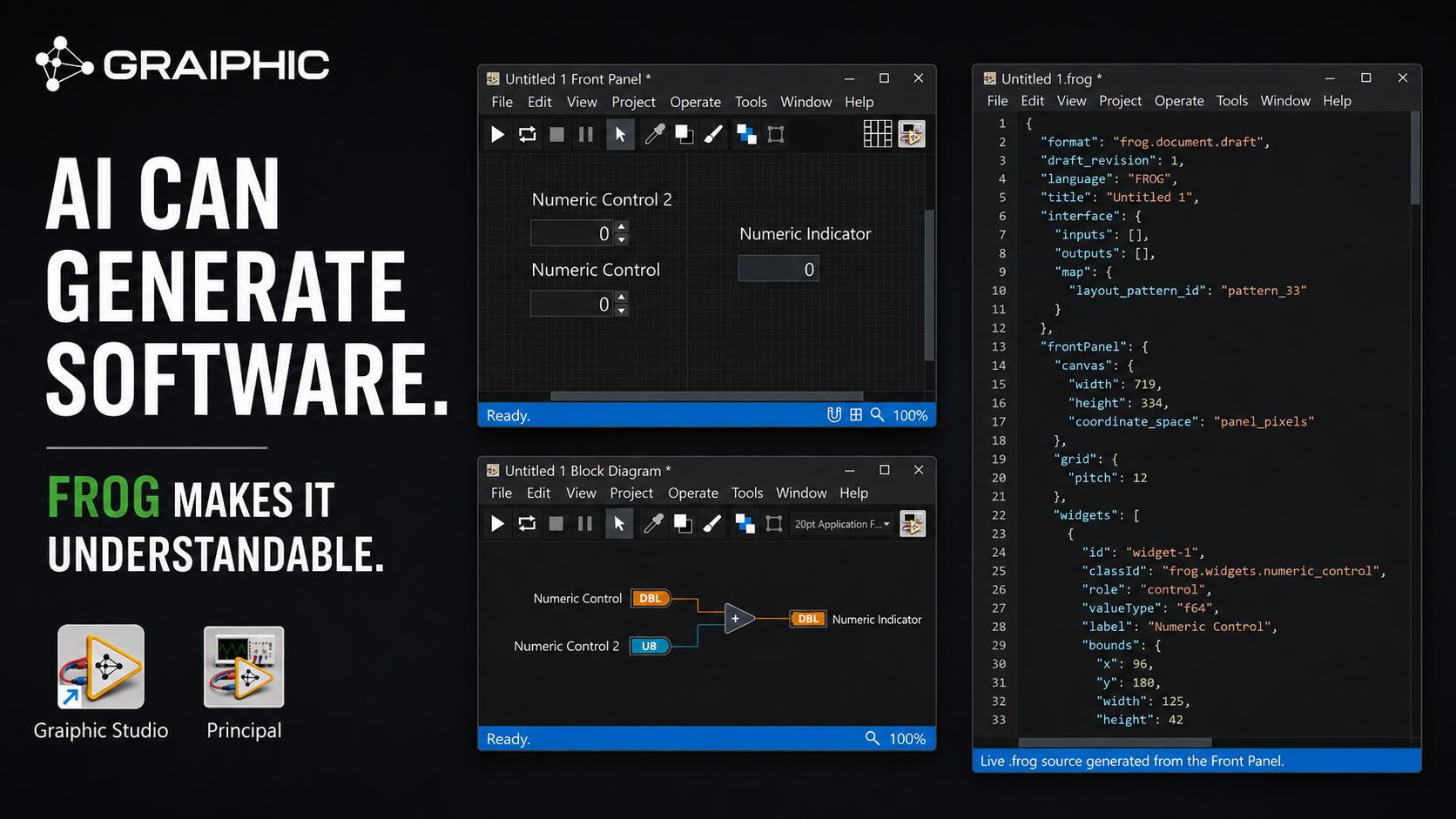
At its core, FROG represents computation as explicit executable graphs instead of syntax-first instruction sequences.
For readers unfamiliar with dataflow programming, the idea is surprisingly simple.
Traditional programming is usually centered around ordered textual instructions:
do this
then this
then this
Dataflow approaches instead focus on relationships, dependencies, state movement, and execution structure.
Computation becomes a graph of connected operations, values, events, state transitions, interfaces, and execution boundaries.
In FROG, the graph itself becomes a first-class executable structure.
But the important part is not merely that the language is graphical.
The important part is that the surrounding execution ecosystem is intended to remain open and inspectable.
That includes:
- canonical source representation
- validated semantic meaning
- execution-facing FIR
- lowering stages
- backend contracts
- runtime bridges
- compiler bridges
FROG is not trying to be “a prettier IDE.”
It is trying to explore what happens when the language layer itself becomes openly inspectable across the entire execution path.
Why the Open FIR Matters
One of the most important ideas in FROG is FIR.
FIR is the execution-facing representation used inside the architecture.
Many modern systems internally generate intermediate representations during compilation or execution preparation. Usually, those representations remain private backend artifacts hidden from users.
FROG intentionally treats FIR differently.
FIR is considered an open bridge surface.
That distinction matters enormously in the AI era.
Why?
Because AI-assisted software increasingly introduces multiple interpretation layers between human intent and final execution:
- source generation
- semantic interpretation
- lowering
- optimization
- runtime adaptation
- hardware specialization
- backend execution
Without visibility into those transitions, software becomes progressively more opaque.
Open FIR creates a shared inspection surface between:
- humans
- AI tooling
- validators
- runtimes
- compilers
- hardware ecosystems
It becomes possible to reason about execution handoff more explicitly instead of treating it as a black box hidden inside proprietary pipelines.
This does not magically guarantee safety.
But it reduces opacity.
And in many industrial contexts, reducing opacity is already a major improvement.
Graphical Programming Becomes Serious When the Entire Chain Is Open
Graphical programming has historically been misunderstood.
Some people associate it with educational tooling or simplified visual interfaces. Others see it merely as a vendor-specific environment abstraction.
FROG approaches the problem differently.
The central idea is not “dragging blocks.”
The serious part emerges when:
- the source is inspectable
- semantics are validated
- execution representations are open
- downstream handoff is explicit
- runtime strategies are transparent
- compiler strategies are inspectable
- conformance expectations are visible
In other words, graphical representation alone is not the innovation.
Open executable structure is.
That distinction becomes especially important once AI systems begin generating portions of industrial logic automatically.
If software becomes partially machine-produced, organizations need stronger review surfaces, not weaker ones.
Runtime and Compiler Paths Can Coexist
Another important architectural direction inside FROG is the coexistence of multiple downstream execution strategies.
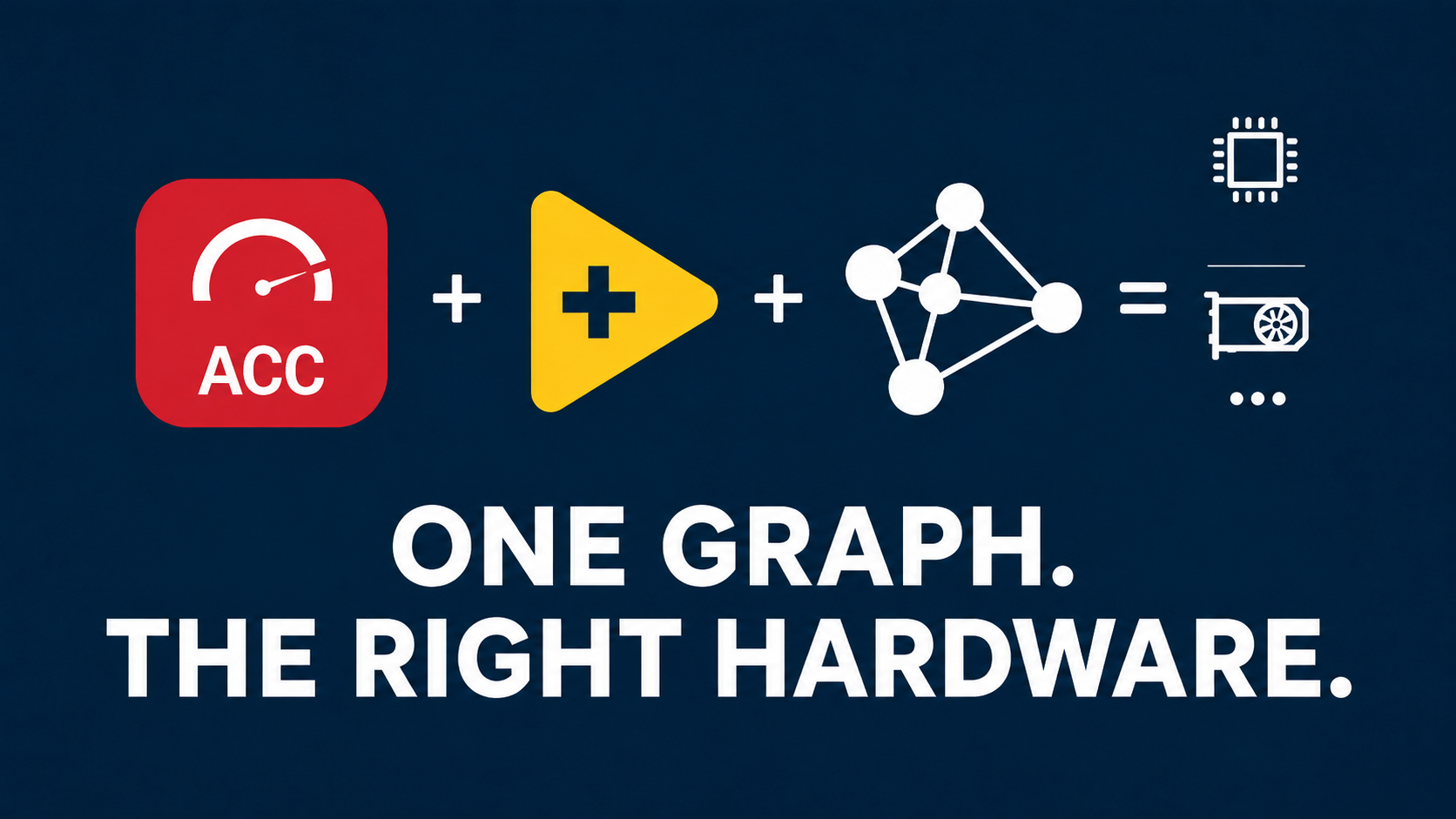
FROG is intentionally hardware-agnostic by architecture.
It is designed to sit upstream from:
- CPUs
- ARM systems
- GPUs
- embedded targets
- industrial edge controllers
- FPGAs
- runtimes
- compilers
- vendor-specific ecosystems
This matters because modern software deployment is no longer uniform.
Some systems prioritize dynamic runtime orchestration.
Others prioritize fully compiled deterministic execution.
Others combine both.
FROG treats runtime-heavy, compiler-heavy, and hybrid deployment strategies as complementary downstream paths that may all originate from the same upstream source and FIR.
That flexibility is increasingly important in heterogeneous environments where execution targets vary dramatically across industrial, embedded, cloud, and edge systems.
The Repository Is Becoming an Open Language Foundation
FROG is currently published as a 0.1-draft specification corpus under active consolidation.
The repository is intentionally structured around specification families rather than a monolithic product mindset.
The six core specification families currently include:
- Expression
- Language
- IR
- Libraries
- Profiles
- IDE
The broader repository also contains:
- Examples
- Conformance
- Implementations/Reference
- Versioning
- Strategy
- Roadmap
This structure reflects an important philosophical direction.
FROG is not intended to become a single IDE, a single runtime, or a single compiler.
It is intended to function as an open language foundation upon which future tooling ecosystems may emerge.
That distinction is essential.
The long-term value is not a specific editor window.
The long-term value is an inspectable execution ecosystem.
Example 05 and the Importance of Vertical Slices
One useful example of the current repository direction is Example 05: bounded_ui_accumulator.
Internally, this example matters because it combines several important concepts simultaneously:
- front-panel package participation
- widget values
- widget references
- UI property writes
- bounded iteration
- explicit state
- public outputs
- runtime-family acceptance
- LLVM-oriented proof posture
That may sound highly technical, but the deeper significance is simple.
Modern software systems are not isolated functions anymore.
They combine interfaces, state, orchestration, execution constraints, runtime interaction, and downstream deployment strategies simultaneously.
Meaningful examples therefore need to demonstrate vertical coherence across the stack rather than isolated toy fragments.
The repository currently exposes Examples 01 through 21 publicly.
Examples 01 through 15 define the current bounded public reference runtime closure, while Examples 16 through 21 continue the widget-facing progression as runtime implementation work evolves privately unless promoted later.
This helps make the project feel alive without pretending the ecosystem is already complete.
AI-Era Provenance Matters
One particularly important direction in FROG is ide.provenance.
This optional source provenance mechanism allows tooling ecosystems to distinguish states such as:
- unknown
- human-direct
- AI-generated
- AI-assisted
- imported
- reviewed
- stale
- invalid
- untrusted
Importantly, these provenance states do not alter executable meaning.
Instead, they help preserve accountability surfaces around software evolution.
That distinction matters enormously.
The objective is not to stigmatize AI-generated logic.
AI-assisted development is clearly becoming a permanent part of software engineering.
The objective is to preserve responsibility chains.
Who generated this?
Who reviewed it?
Was it validated?
Was it modified afterward?
Is this artifact still trusted?
Those questions become increasingly important once generation scales faster than human review capacity.
What FROG Is Not
It is important to avoid overclaiming.
FROG is not:
- a magical safety guarantee
- a claim that graphical form automatically produces secure software
- a replacement for engineering rigor
- a universal runtime
- a proprietary vendor platform
- a single compiler
- a single IDE
- a completed ecosystem
FROG also does not assume that openness alone solves accountability.
Bad logic can still exist inside explicit structures.
Unsafe systems can still be built.
Poor review processes can still fail.
The stronger claim is narrower and more realistic:
Explicit structure, open artifacts, validated semantics, inspectable FIR, and transparent downstream handoff reduce opacity and improve inspectability.
In the AI era, that alone may become strategically important.
The Post-AI Accountability Era May Need Different Foundations
The software industry is entering a strange transition.
For years, the challenge was enabling more software creation.
Now the challenge increasingly becomes maintaining intelligible responsibility across machine-accelerated creation pipelines.
That changes the architectural conversation.
It shifts attention toward:
- inspectable execution
- validation surfaces
- provenance
- open intermediate representations
- execution transparency
- heterogeneous deployment accountability
- human review continuity
FROG explores one possible direction inside that broader movement.
Not as a finished answer.
But as an attempt to reopen important architectural questions before the industry normalizes opaque AI-generated execution pipelines as inevitable.
Because eventually, organizations will not merely ask:
“Can AI generate this?”
They will ask:
“Can humans still understand, validate, and responsibly operate what AI helped create?”
Those are different questions.
And the second question may ultimately matter more.
Following the Project
FROG should be understood as an open language foundation effort rather than a traditional software product announcement.
The repository is evolving publicly, progressively consolidating specifications, execution paths, examples, runtime directions, and ecosystem structure.
Some readers will approach it from industrial automation.
Others from embedded systems, AI tooling, runtime architecture, robotics, or compiler ecosystems.
That diversity is intentional.
Because the larger issue extends far beyond graphical programming itself.
The deeper issue is whether future software systems remain meaningfully inspectable once software generation becomes industrially abundant.
FROG is one exploration of that future.
And the post-AI era may require many more.