Design the system directly.
Nodes, connections and dataflows make the logic visible. Dependencies express execution order and opportunities for parallel processing.

Graiphic defined FROG from the ground up: a new graphical dataflow programming language. Created in our R&D and Innovation Center, it combines readable diagrams with an open source format designed for AI tools, validation and modular execution architectures.

Our innovation opens the language foundations: source format, semantic rules, execution representation and runtime/compiler contracts. The intended gain is to put more engineering effort into the system you design and the quality of its logic.
Nodes, connections and dataflows make the logic visible. Dependencies express execution order and opportunities for parallel processing.
JSON-based .frog source is designed for generation and transformation by tools. The diagram and validation rules provide a structured way to review and control the result.
Readable source, changes tracked in Git and public rules keep programs inspectable and usable by different tools.
Source, language, IDE, runtimes and compilers have explicit boundaries. This modular architecture lays the groundwork for multiple execution and deployment strategies.
FROG brings together two AI-era needs: structured source that tools can produce and graphical logic that engineers can inspect. The goal is for generated programs to be understood, validated and controlled.
Read the analysis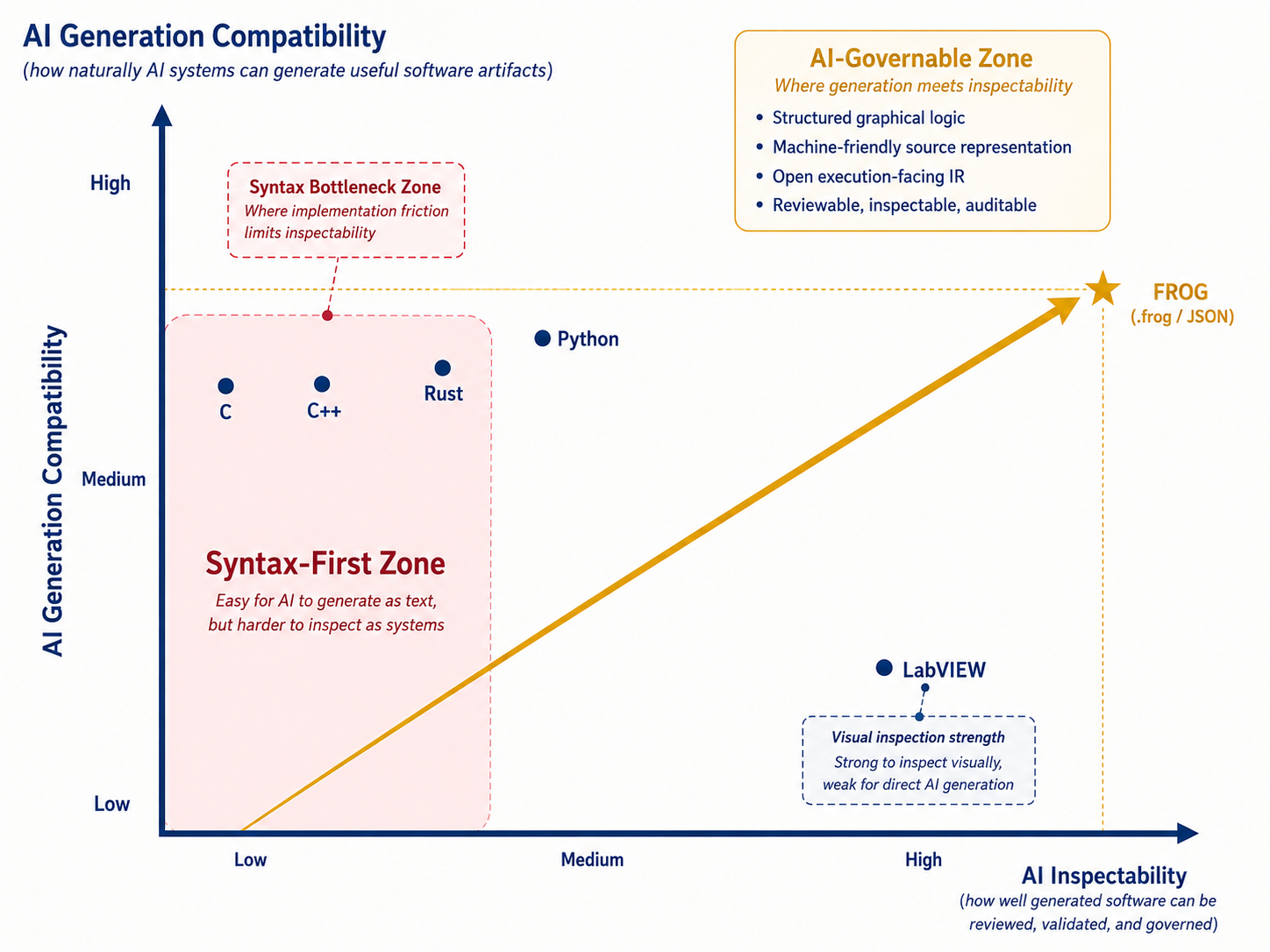
Visual expression accessible to engineers, with an architecture designed for industrial execution. FROG targets one open model spanning prototypes, embedded systems, instrumentation and heterogeneous computing.
Read the analysis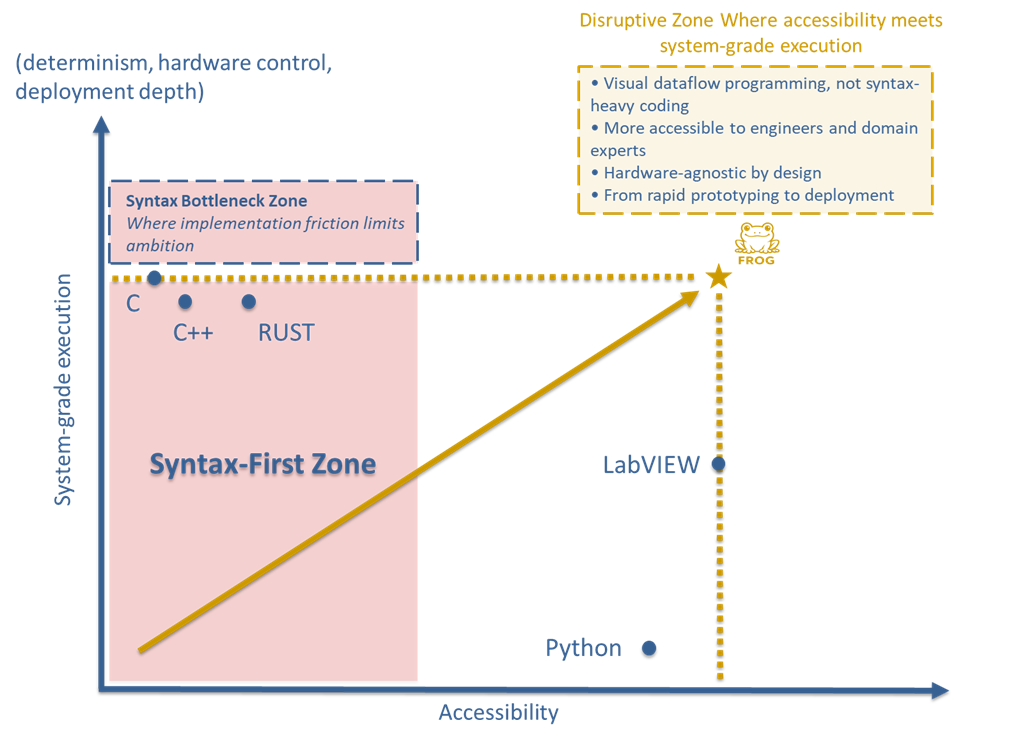
FROG’s intermediate representation, FIR, connects source to explicit execution contracts. It provides a foundation for runtime, compiler and hardware families without redefining the language for each integration.
FROG builds on Graiphic’s expertise in instrumentation, LabVIEW architecture and industrial AI. Our SOTA GO and GO HW research led our R&D and Innovation Center to the foundations of a new language.
Express acquisition, control and equipment interactions through visible data dependencies.
Prepare architectures for execution constraints through modular hardware and software bridges.
Generate, review, validate and evolve programs while retaining structured, traceable artifacts.
Example 05 combines a user interface, state, a bounded loop, FIR, a backend contract and native LLVM proof artifacts.
View Example 05 sourcesExamples 01 through 15 form the public reference execution set, with C++, Python and Rust consumers and conformance checks.
Explore the public referenceSource format, language rules, libraries and contracts are public. Apache 2.0 licensing supports tools built around this open foundation.
Explore the FROG repositoryActive development: the specification is at 0.1-draft. The public reference covers bounded examples; Graiphic continues runtime generalization and Studio development. View project status ↗
Developed by Graiphic, the first FROG IDE brings Front Panel, Block Diagram and Source together. Design interfaces visually, compose graphs and inspect source in the new language.
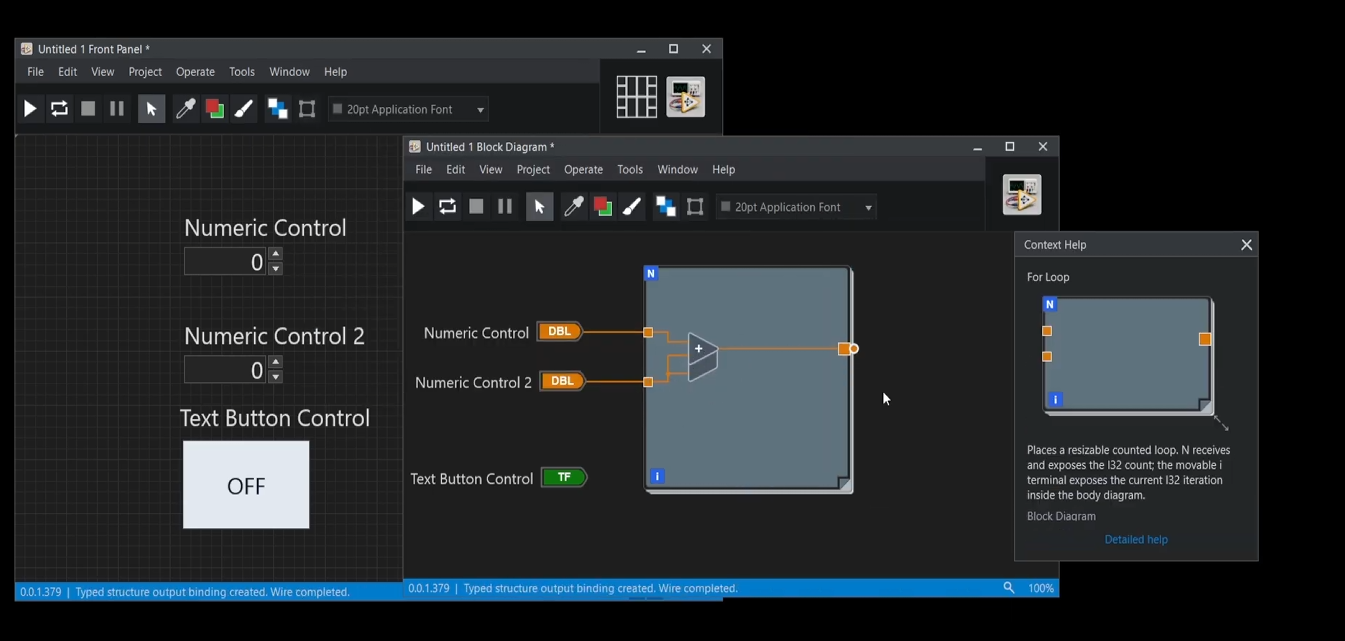
Want to explore FROG, contribute to its ecosystem or discuss an integration? Talk with the architects who created the language.
Talk with Graiphic